June 15, 2026
The Health Benefits of Recovery: Why Rest Is Not Optional
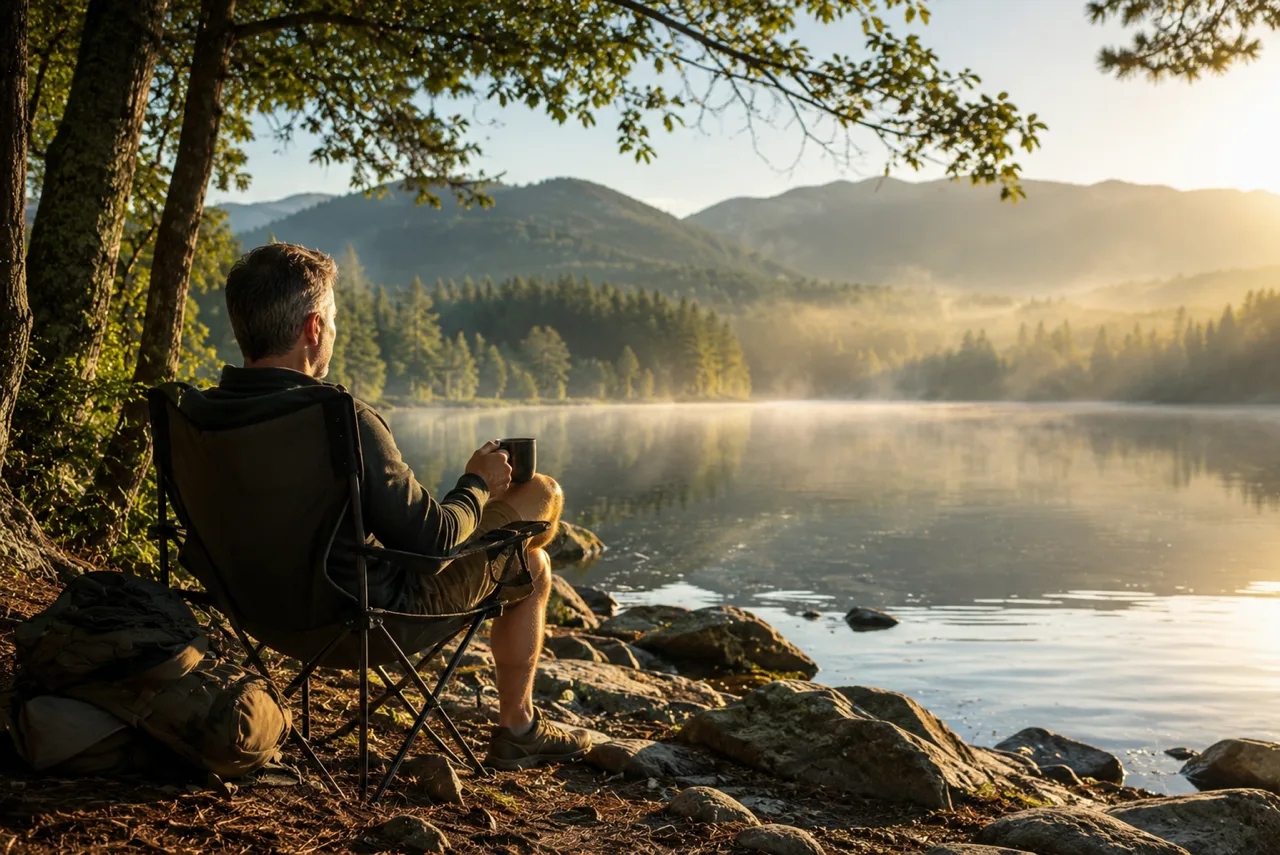
Every so often, I’ll see someone sitting quietly beside a lake.
Usually, it’s a man or woman somewhere in midlife. A camp chair. A cup of coffee. No phone in their hand. No apparent agenda. They simply sit, looking out over the water, listening to the breeze move through the trees.
If you asked most people what they were doing, they’d probably answer, “Relaxing.”
I see something different.
I see therapy.
That may sound like an odd word to use. After all, there are no prescriptions being written, no procedures being performed, and no medications being dispensed. Yet beneath the surface, something extraordinary is taking place.
Heart rate slows. Blood pressure eases. Breathing becomes deeper. Stress hormones begin to decline. Muscles relax. The nervous system gradually shifts away from vigilance and toward restoration.
The body is doing what it was designed to do.
It is recovering.
Recovery Is an Overlooked Pillar of Health
As a physician, I’ve become convinced that recovery is one of the most overlooked pillars of health. We devote enormous attention to nutrition, exercise, supplements, medications, and the latest advances in medicine. All of those have their place. But none of them can fully compensate for a nervous system that rarely has the opportunity to stand down. Healing requires challenge, but it also requires restoration. Modern life has become remarkably good at supplying the first and surprisingly poor at providing the second.
We often speak as though stress itself is the enemy. In reality, stress is an essential part of life. Exercise is stress. Learning is stress. Building a business is stressful. Raising children is stressful. Caring for aging parents, serving patients, leading a congregation, teaching a classroom, or responding to an emergency all require us to adapt to challenge. Without stress, we would never become stronger.
The problem isn’t that our lives contain stress. The problem is that many of us have forgotten how to recover from it.
The Hidden Cost of Chronic Stress Without Recovery
Ironically, the people who most need recovery are often the least likely to recognize it. They rarely describe themselves as stressed or burned out. Instead, they describe themselves as responsible. They are the physicians, parents, entrepreneurs, pastors, teachers, caregivers, first responders, and countless others who carry weight because weight needs to be carried. They answer the call, solve the problem, stay late, and push through fatigue because people are depending on them.
Those qualities are admirable. In fact, they’re often the very qualities that lead to meaningful lives and successful careers. But there is an important distinction between high capacity and unlimited capacity. Many responsible people become so accustomed to enduring that they begin to mistake endurance for health. They continue functioning, so they assume they’re doing well.
The body tells a different story.
At first, the signs are subtle. Sleep becomes lighter. Energy fades more quickly. Patience shortens. Exercise requires longer recovery. Digestion changes. Blood pressure begins to creep upward. Mental clarity isn’t quite what it used to be. Joy becomes a little harder to access. Because these changes develop gradually, they’re easy to dismiss as aging or simply the price of a busy season.
More often than not, they represent something else: the biological cost of chronic demand without adequate recovery.
Stress Provides the Stimulus. Recovery Is Where Healing Happens.
One of the greatest lessons from exercise physiology applies just as well to the rest of life. Muscles are not built while lifting weights. They are built afterward. The workout provides the stimulus; recovery is where adaptation occurs. The same principle applies throughout the body. The brain consolidates memories during sleep. Hormones recalibrate during recovery. The immune system performs much of its repair work during periods of rest. Even emotional resilience grows when seasons of challenge are followed by restoration.
Stress provides the stimulus. Recovery is where healing happens.
That is why I’ve come to believe we need a better definition of recovery. Recovery is not laziness, nor is it an escape from responsibility. It is not something we do because we lack discipline. It is something we do because we understand biology.
Recovery is how responsible people remain capable of carrying responsibility.
Your body does not distinguish between noble stress and unnecessary stress. It responds to both. Whether you’re caring for a sick child, running a business, leading an organization, responding to a medical emergency, or worrying about finances, your nervous system, hormones, immune system, cardiovascular system, and metabolism all have to respond. The body keeps score, even when the reason for the stress is honorable.
That doesn’t mean we should avoid meaningful work. Quite the opposite. A life without challenge is rarely a fulfilling one. The goal isn’t to eliminate stress but to create enough recovery that the body can continue adapting instead of simply enduring.
Time in Nature Can Help the Nervous System Recover
One of the simplest and most neglected ways to begin that recovery is to spend time outdoors. Not as another competition or fitness challenge, but simply to be present. A quiet trail, a mountain lake, the sound of moving water, morning sunlight filtering through the trees, or even twenty uninterrupted minutes on a porch can begin communicating something to the nervous system that modern life rarely does:
You are safe.
The Japanese have a beautiful term for this practice: Shinrin-yoku, or “forest bathing.” Despite its name, there is no bathing involved. It simply means immersing yourself in the atmosphere of the forest and engaging your senses. Since its introduction as a public health practice in Japan during the 1980s, researchers have found that spending time in natural settings can reduce cortisol, lower blood pressure, improve mood, decrease anxiety, and help restore mental attention. We are only beginning to understand all the reasons why nature affects us so profoundly, but most people don’t need a scientific paper to know it’s true. They feel different after spending time outside.
Recovery Has to Become Intentional
Of course, recovery is much bigger than nature. It includes restorative sleep, nourishing food, regular movement, healthy relationships, prayer, solitude, laughter, play, and moments of genuine stillness. The common thread is that each of these practices helps move the body from a state of constant vigilance toward one of restoration.
The mistake many responsible people make is waiting until life becomes less demanding before giving themselves permission to recover. That day rarely comes. There is always another patient to see, another meeting to attend, another deadline to meet, another child who needs you, another problem waiting to be solved.
If recovery waits until everything else is finished, it will never happen.
Instead, recovery has to become intentional. It has to be scheduled, protected, and respected—not because life is easy, but because life is demanding. If you hope to continue serving the people who depend on you, your health cannot remain an afterthought. Your family needs your patience. Your work needs your judgment. Your community needs your steadiness. The responsibilities that matter most deserve the healthiest version of you.
Real Strength Includes Restoration
Perhaps we need a better definition of strength. Strength is not the ability to ignore your limits indefinitely. Strength is understanding the remarkable design of the human body and respecting it enough to care for it. Real strength has a rhythm to it. It embraces challenge, but it also values restoration. It works hard, but it also knows when to recover.
So the next time you see someone sitting quietly beside a lake, don’t be too quick to assume they’re doing nothing.
They may be doing some of the most important work of all.
They may be preparing themselves to return home with greater patience, clearer judgment, renewed perspective, and the capacity to continue carrying what matters most.
Recovery is not escape from responsibility.